Case sealing machinery specialists — UK supply, installation and support01494 623015 · sales@lancinguk.com

Buyer guide

Carton Sealing Tape Selection Guide

Choose carton sealing tape by checking carton board, storage conditions, tape width and application method.

Carton Sealing Tape Selection Guide

Why this guide matters

Carton Sealing Tape Selection Guide matters because the best case taper choice is rarely just the lowest price. It needs to match real cartons, working space, staffing and the final dispatch requirement.

Information to gather

Before asking for a quote, gather tape adhesive, width, roll length, board surface and storage temperature. This makes the recommendation more useful and reduces the risk of buying a machine that is too slow, too large or awkward to use.

How to use the advice

Use this page to frame the enquiry, compare options and decide whether a semi-automatic, automatic, random-size or conveyor-fed carton sealing setup is most likely to solve the issue.

Questions to ask before requesting a quote

Before requesting a quote for carton sealing tape selection guide, check whether the same operator will close flaps, whether cartons arrive square, how boxes are moved after sealing and whether the machine needs to fit into an existing conveyor or bench layout. Clear answers help avoid overspecifying the machine or missing an important support requirement.

Why carton samples matter

A sample carton tells more than a broad description. The board quality, fold memory, filled weight and seam position all affect how a case taper handles the box. If the site uses several carton sizes, send the smallest, largest and most common cases so the recommendation covers the real operating range.

Next step

For practical advice, compare the case taper machine range, read the buyer guide or send carton details through the quote form.
Carton Sealing Tape Selection Guide FAQ

Is carton sealing tape selection guide a sign that I need a new case taper?

Not always. It may be solved by adjustment, maintenance, better tape, operator training or a different line layout. If the issue keeps returning, a machine review is worthwhile.

What details should I send for advice?

Send tape adhesive, width, roll length, board surface and storage temperature, plus photos or a short video of the current packing process. This helps narrow the recommendation quickly.

Can Case Tapers UK advise on machines, spares and service?

Yes. Lancing Ltd can advise on case tapers, carton sealing machines, box taping machines, tape heads, spares, installation and ongoing service support.

Tape and carton compatibility

Trial the actual tape on the actual board before fixing the tape-head specification.

Tape width alone does not establish compatibility. Backing, adhesive, roll construction, board surface, storage and application pressure all affect the finished seal.

Record the complete tape reference

Provide the manufacturer, product code, width, roll length, backing and adhesive description. Include the core and outside-roll dimensions where known. If several tapes are used, identify which cartons and conditions apply to each.

Check the board surface

Recycled, coated, printed, dusty or cold board can change adhesion. Use representative production cartons and reproduce normal storage conditions where practical. A tape that adheres well to a clean warm sample may behave differently on the line.

Confirm tape-head compatibility

The selected tape head must accept the tape format and apply it with a clean path, cut and wipe-down. Do not modify a tape head or blade arrangement without the manufacturer’s instructions. Where an existing machine is involved, send its model and tape-head identification.

Assess the full seal

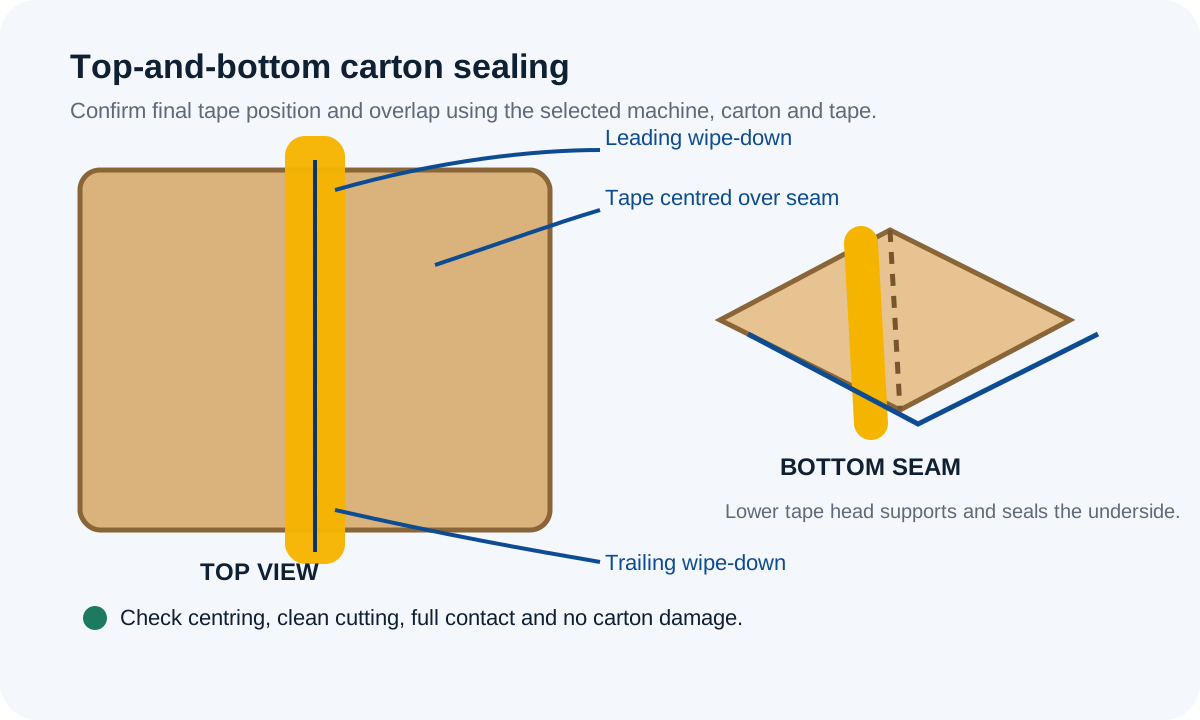
Inspect the leading application, centre seam, trailing application and both wipe-down areas. Look for lifting, wrinkles, off-centre tape, incomplete contact, ragged cuts and board damage. Keep approved samples and photographs as a production reference.

Control storage and handling

Record where tape is stored, how long rolls remain open and whether temperature, dust or humidity changes. Rotate stock and follow the tape supplier’s guidance. If performance changes after a new delivery, compare the tape reference and storage history before altering machine settings.

Diagram showing carton tape centred over the seam and pressed onto leading, centre and trailing areas
Inspect the complete applied tape path. The selected tape head, carton and tape supplier will define the final compatible format.
Trial variableRecordObserve
TapeSupplier, code, width, roll and adhesiveFeed, cut, unwind and application consistency
BoardGrade, print, coating and surface conditionInitial tack, full contact and lifting
EnvironmentStorage and sealing-point conditionsChanges between normal and difficult periods
Case setupDimensions, weight, flap alignment and fill levelCentring, wipe-down and carton damage
MachineModel, tape head and approved settingsRepeatability after tape loading and changeover