Case sealing machinery specialists — UK supply, installation and support01494 623015 · sales@lancinguk.com

Troubleshooting

Case taper troubleshooting guide

Common checks for poor tape application, carton jams and unreliable sealing on case tapers and carton sealers.

Case taper service support for troubleshooting tape seals and carton jams

Poor tape adhesion

Check carton board quality, tape adhesive, tape pressure and whether the carton flaps are fully closed before sealing. Cold or dusty environments can also affect tape performance.

Tape not cutting cleanly

Inspect the blade, blade spring, tape path and adhesive build-up. A dull or contaminated blade can leave ragged cuts or drag tape through the machine.

Carton jams or skewing

Check side guides, belt pressure, carton weight, overfilled cases and transfer points before and after the machine. Cases should enter squarely and remain stable through the sealer.

When to ask for service help

If repeated adjustment does not solve the issue, send photos or video of the problem, the machine type, tape used and carton dimensions so the likely cause can be narrowed down.

Next step

For a practical recommendation, send carton dimensions, packed case weight, tape details, target output and photos of the current packing area. The aim is to match the case taper to your cartons and workflow, not to force a standard machine into the wrong process.

Use the case taper quote form or call 01494 623015.
Case taper troubleshooting guide FAQ

Why is my case taper not cutting tape?

Common causes include a dull blade, adhesive build-up, tape path issues or worn tape-head parts.

Why are cartons jamming?

Cartons may be entering skewed, overfilled, too light, too heavy or not guided correctly.

Can you troubleshoot from photos?

Photos and short videos can often help identify likely causes before arranging further support.

Structured fault finding

Record the symptom, isolate one variable and compare a repeatable sample.

This guide supports normal operator observation only. Follow the machine manual and site isolation procedure for access to blades, drives, electrical parts or guarded areas.

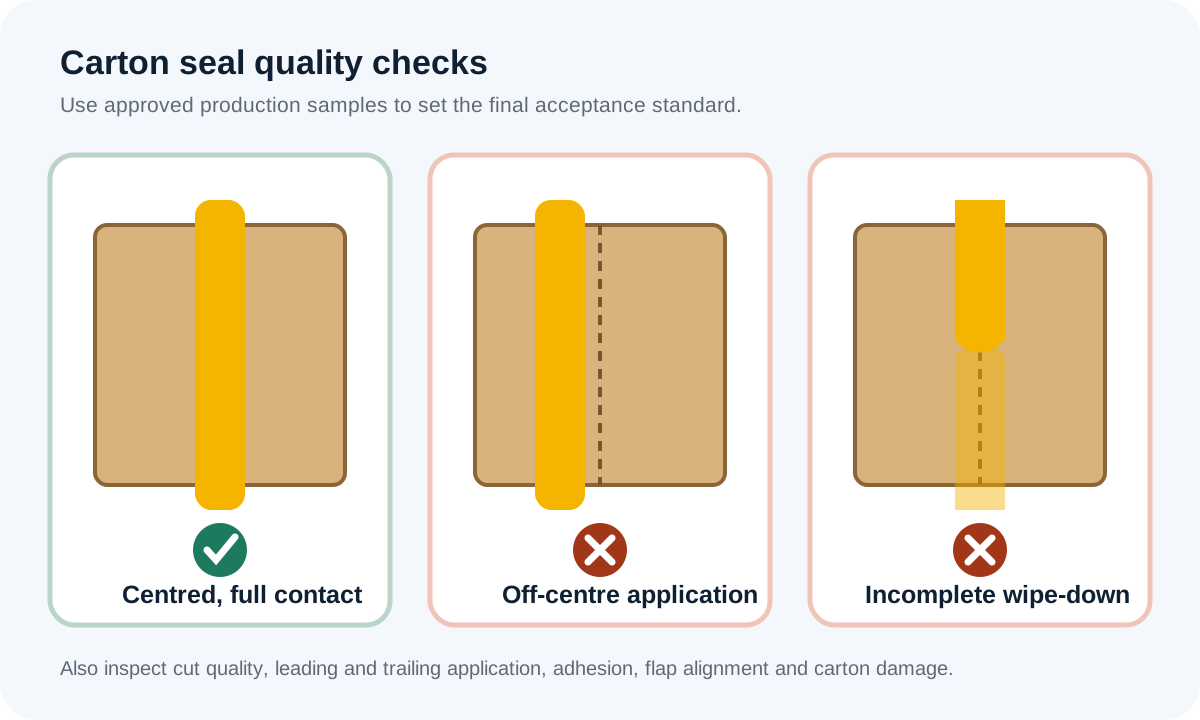
Qualitative carton seal examples showing centred tape, off-centre tape and incomplete wipe-down
Photograph the complete top and bottom seals and identify which carton, tape and settings produced the sample.

Start with a fault record

  • Machine and tape-head identity
  • Carton dimensions, packed weight and board
  • Tape supplier reference and roll details
  • Top or bottom head affected
  • Whether the fault is constant or intermittent
  • Carton size, shift or tape change that triggers it
  • Photographs and a short safe operating video
SymptomOperator-level evidence to checkEscalate when
Tape lifts from boardBoard dust or coating, temperature, tape reference, wipe-down and whether the fault follows one carton supply.Compatible tape and normal cleaning do not restore adhesion.
Tape is off-centreCase enters squarely, guides are set, carton is stable and tape path appears correctly loaded.Alignment cannot be restored through permitted setup checks.
Ragged or incomplete cutVisible adhesive build-up, correct tape loading and whether the fault affects one tape roll.Blade or internal tape-head parts require access or replacement.
Carton jams or skewsOverfilling, damaged board, guide pressure, belt contact and transfer points.Driven or guarded mechanisms need adjustment or the machine cannot handle an agreed carton.
Flaps reopenFill height, fold sequence, board memory and flap presentation.Flap-closing timing or mechanisms require service intervention.

Use a controlled repeat test

Keep one carton size, tape roll and known starting setup. Make one permitted adjustment at a time and run enough samples to show whether the result is repeatable. Return to the recorded starting point if the change does not improve the fault.

Separate material changes from machine changes

Compare the current carton and tape references with the last approved samples. A new board supplier, coating, adhesive or storage condition can create a sudden fault even when the machine settings have not changed.

Confirm the result on the full range

After the fault is corrected, run the smallest, largest and most common filled cartons. A setting that works on one case may cause guide pressure, poor centring or transfer problems on another.