Site and integration
Use the site survey checklist to compare space, transfer and utility implications.
Compare options
Compare case taper machine types, carton sealing layouts and box taping options before asking for a machinery quote.
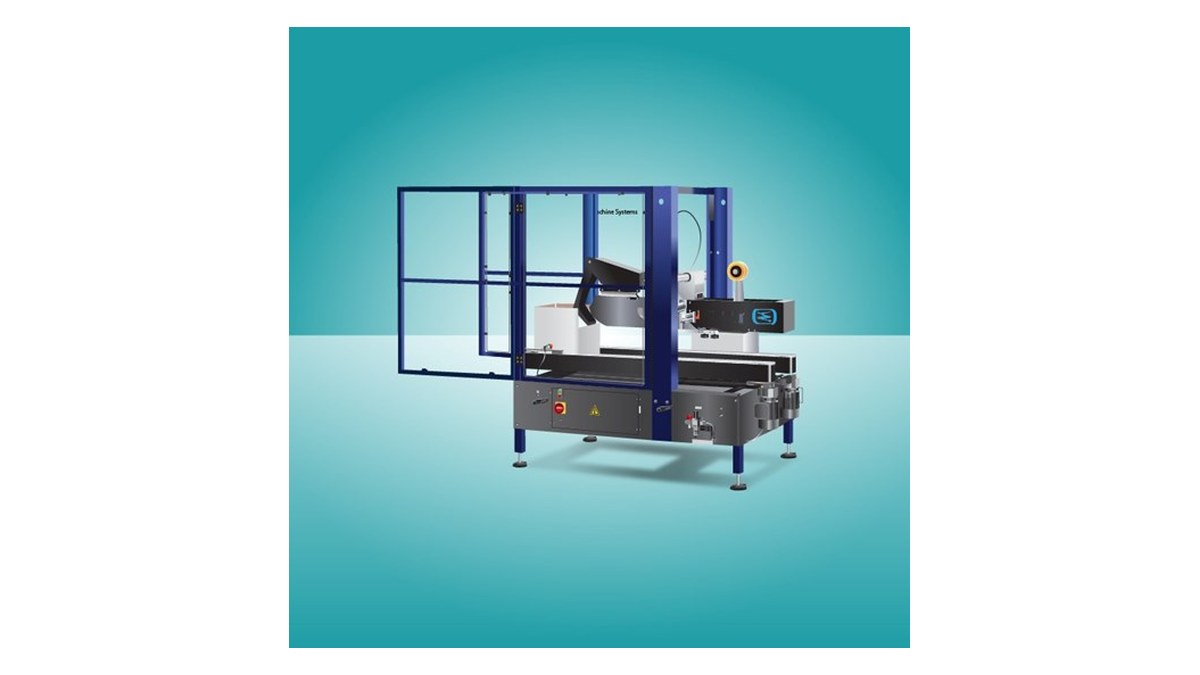
Compare semi-automatic and random case tapers for packing areas with fixed or changing carton sizes.
Understand when to choose an automatic carton sealer for repeated cartons or a random carton sealer for mixed sizes.
Compare side belt and bottom belt case taper layouts for different carton weights, shapes and stability needs.
Choose between fixed-size and random-size case sealers based on carton changes, labour and packing flow.
Compare operator-fed and fully automatic case tapers before deciding how much box sealing automation is justified.
Understand the terminology around carton sealers, box taping machines, case sealers and case tapers.
Compare pressure-sensitive tape case sealing with other carton closure approaches before choosing equipment.
Decide whether a standalone case taper is enough or whether conveyors should be included in the packing layout.
Compare entry-level case tapers with production case tapers for growing UK packing operations.
Compare uniform case tapers and self-adjusting case tapers for fixed or mixed carton operations.
Compare inline case sealers with compact packing bench carton sealers for different warehouse and production layouts.
Compare top and bottom tape sealing with hand taping for speed, neatness and repeatability.
Comparison method
A fair comparison uses the same cartons, tape, run sequence, operator tasks and acceptance criteria for every option.
Include case erection, packing, flap folding, presentation, sealing, label application and removal. A machine that seals quickly can still leave a bottleneck if the operator cannot prepare cartons or the outfeed fills faster than cases are removed.
Ask suppliers to explain the conditions behind any stated output. Your evaluation should use sustained operation with representative filled cartons, normal changeovers and the people who will operate the equipment.
| Comparison area | Evidence to request |
|---|---|
| Carton capability | Test record for the smallest, largest, heaviest and least stable representative cases. |
| Tape performance | Seal samples produced with the intended tape and board under realistic conditions. |
| Output | Timed sustained run, including normal spacing and operator handling. |
| Changeover | Documented steps and a witnessed repeat setup. |
| Integration | Confirmed conveyor level, direction, controls and transfer responsibilities. |
| Support | Scope for installation, training, spares identification and service response. |
Final technical resource layer
Semi-automatic, automatic, uniform and random machines create different responsibilities for carton preparation, format control, line signals and acceptance.
| Comparison question | Why it matters | Evidence to prepare |
|---|---|---|
| Who folds and presents the flaps? | Defines operator work and whether additional closing equipment is needed. | Video of the current cycle and representative filled cases. |
| Are sizes batched or mixed? | Separates planned changeover from automatic random adjustment. | Carton matrix and order sequence. |
| How does the line stop and restart? | Controls accumulation, fault recovery and uncontrolled carton release. | Line diagram and functional scenarios. |
| How will the seal be accepted? | Makes quotation and FAT comparison objective. | Seal-quality reference and test plan. |
Use the site survey checklist to compare space, transfer and utility implications.
Compare controlled changeovers with true mixed-size operation.
Use the FAT guide so options are tested against the same carton matrix.